Introduction
Alcohol itself leaves the blood within hours, but some tests look for traces that last longer. How long depends on the test, the amount, and the person’s body. This article sets out what federal sources say about each kind of test, and why the more useful question is often what happens when heavy drinking stops. Our page on how medical detox works with us explains what supervised withdrawal looks like with us.
We do not give advice on passing a test. If a result matters for work, a court or a custody case, ask the person who ordered the test how it is read.
Key takeaways
Alcohol shows up in blood and breath for hours, not days. Some urine tests look for byproducts of alcohol that can reveal drinking over a longer stretch. For someone who drinks heavily every day, the timing that matters most is how soon withdrawal can start once drinking stops.
| Question | Short answer |
|---|---|
| How long is alcohol in the blood? | A blood test can detect it for up to about 12 hours. |
| How long does a breath test pick it up? | It confirms drinking within the past several hours. |
| Can urine show drinking for longer? | Some urine tests look for byproducts that last longer. |
| Does coffee or a shower speed it up? | No. Only time lets the liver clear alcohol. |
| When is stopping risky? | After long, heavy drinking, withdrawal can be dangerous. |
How long does alcohol stay in your system?
Alcohol itself is usually detectable for hours. MedlinePlus says a blood alcohol test can detect it for up to about 12 hours after the last drink. Some urine and hair tests look for byproducts that can point to drinking over a longer period.
Once a drink is absorbed, alcohol stays in the bloodstream until the liver breaks it down. If someone drinks faster than the liver can clear it, the blood level climbs, as the MedlinePlus page on the blood alcohol level test explains.
SAMHSA’s guide on clinical drug testing puts the timing simply. The detection period for ethyl alcohol itself is hours, not days.
The same guide notes that the rate varies a great deal between people. Gender, age, weight and physical condition all play a part, especially the health of the liver. That is why no single number fits everyone, and why online calculators can mislead.
Two people can drink the same amount at the same table and test very differently hours later. A heavier meal before drinking, a smaller body, an older age or a liver already strained by years of drinking can all change the result. Even a breath test, which SAMHSA calls accurate when done properly, can be affected by body temperature and breathing patterns.
How long does each type of test detect alcohol?
Blood and breath tests show recent drinking, within hours. Urine tests vary, and some look for byproducts that last longer. Hair testing for alcohol itself does not work, though byproducts in hair are being studied.
| Test | What it shows | What federal sources say |
|---|---|---|
| Blood | Alcohol in the blood now | Detects alcohol for up to about 12 hours after the last drink (MedlinePlus) |
| Breath | An estimate of the blood level | Confirms drinking within the past several hours; may read lower than blood (SAMHSA) |
| Urine | Recent drinking, or byproducts of alcohol | Some urine tests detect drinking over a longer time frame (MedlinePlus) |
| Urine EtG | Ethyl glucuronide, a direct byproduct | Used to monitor people who have been told to abstain (SAMHSA) |
| Hair | Longer-term patterns | Alcohol itself does not enter hair; byproducts in hair show promise (SAMHSA) |
| Saliva and sweat | Recent drinking | Less common methods (MedlinePlus) |
We have not given an hour count for EtG tests. The federal sources we read do not set one, and SAMHSA’s guide to clinical drug testing in primary care notes that more research is needed to rule out exposure from products such as mouthwash and hand sanitizer.
What affects how long alcohol stays in your body?
How much and how fast someone drank, whether they ate, their weight, age and sex, the medicines they take, their tolerance and the health of their liver.
MedlinePlus lists these factors as things that change both the blood alcohol level and how impaired a person is. Tolerance deserves a word of caution. Someone who drinks heavily every day may feel steady at a level that would make others very drunk. Feeling sober is not the same as having a low level.
Rising tolerance is also one of the signs clinicians ask about when they assess alcohol use disorder. Our article on the signs of a functioning alcoholic covers that and the other criteria in plain terms.
Can you speed up how fast alcohol leaves your system?
No. Only time lets the liver clear alcohol. NIAAA says cold showers, hot coffee and walking do not reverse the effects of an alcohol overdose and can make things worse.
NIAAA adds a warning that many people do not know. The blood alcohol level can keep rising after someone stops drinking, or even after they pass out, because alcohol still in the stomach and intestine keeps entering the blood.
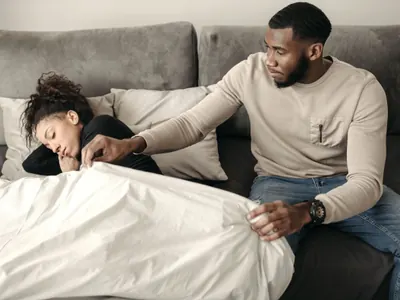
That is why a person who has passed out should never be left to sleep it off. Call 911 for confusion, vomiting, seizures, slow or irregular breathing, clammy or bluish skin, or if they cannot be woken. Do not wait for every sign.
Talk to us
Worried about stopping after heavy drinking? Call (818) 422-7772. Admissions answers at any hour, in confidence.
What happens when alcohol leaves the system after heavy drinking?
For someone who has been drinking heavily for a long time, the body may react with withdrawal. NIAAA describes alcohol withdrawal as potentially life threatening.
Here the question changes. For an occasional drinker, alcohol leaving the body is the end of the story. For a heavy daily drinker, the brain has adapted to alcohol being there. As the level falls, symptoms such as shaking, sweating, anxiety and poor sleep can appear, and severe cases can bring seizures and confusion.
Our page on the alcohol withdrawal timeline and how it is assessed sets out when symptoms tend to start and peak. We do not repeat the hours here, because the timing depends on the person and belongs with a clinician.
Some people try to stop quietly at home to keep it private. Our article on whether it is safe to detox at home explains when that is reasonable and when it is not.
When should someone get help to stop drinking?
Before stopping, if they drink heavily every day, feel shaky or sick as alcohol wears off, or have had a withdrawal seizure or severe confusion before.
Our article on the signs someone needs medical detox walks through each of these. At our house, medical detox and residential treatment happen under one roof, so withdrawal leads into treatment without a transfer.
Sleep is often the last thing to settle. If nights stay hard after the first weeks, our article on why sleep stays broken after quitting alcohol explains what is happening.
People who face workplace testing often worry about privacy too. Our article on what employers and others can learn about treatment covers the federal rules.
If cost is part of the decision, we work with many PPO plans, and our guide to how insurance pays for addiction treatment explains the basics.
In an emergency, call 911. If you or someone close to you is thinking about suicide, call or text 988, the Suicide and Crisis Lifeline, at any hour.
Talk to us before you stop
Call (818) 422-7772 at any hour, or contact us. The call is confidential and commits you to nothing.
Published . This article is general information, not medical advice.